Showing posts with label literature. Show all posts

Tuesday, March 14, 2023

Why internal consistency in stories matters

Jack Reacher, created by starryai.com

 Internal consistency. 

This is something I discovered needs to be present throughout the series, or even a story. The realisation came while reading Jack Reacher novels by Lee Child. I understand that the author leaves the protagonist as a mostly blank slate. Gives him the manoeuvring space and allows the reader to imagine himself as Reacher. That at least is the theory. If we agree with that, is something else. 

Child likes to pay lip service through Reacher to the cause of the day, to show how hip and with times his hero is. All well and fine. But it's jarring when there is no reflection on the hero's actions that contradict his beliefs, even if they were meant as lip service. 

Example: Reacher states that women are as capable as men in combat. He trully believes that. And then later on with one swing he accidentally snaps the neck of a female serial killer who got in his way. 

Another example is the way he is extorted into helping FBI. Through previous books it's established Reacher doesn't let bullies get away with it no matter who they are. He's going to tolerate them as long as they're pestering him, but if they go after someone innocent or someone he likes, the gloves are off.

 So the way in which Reacher helps FBI because they threaten to doxx his girlfriend, and thus put her life in danger from a local crime lord is just stupid. Especially when you take in consideration that one call from Reacher to the highest echelons of FBI would get him rid of those wicked agents, because they owe him from previous books. 

But we're supposed to just accept it, so the story can happen, even when that same story could happen while also staying true to the character. 

I draw comparison with another thriller author, Tom Clancy. He also loved to pay lip service to the cause of the day, but he had the wisdom to do it in a way it didn't come back to bite him. 

Example: Women are as capable in leadership positions as men. Prime example through Jack Ryan series is the head of Secret Service. Clancy acknowledges that in normal circumstances she could never become the head of the secret service, but once the opportunity arises, Clancy has her rise up to the occasion and demonstrate her capabilities in action. 

When there appeared an incapable woman in leadership position Clancy went to great lengths in order to demonstrate she wasn't incapable because she was a woman, but because she was promoted to the position without merit. 

In short, it is often said, show don't tell. With internal consistency is show what you tell, or at least acknowledge how the actions that contradict already stated facts influence the beliefs of the characters.

 It doesn't have to be much, it doesn't have to be definitive, but it has to be acknowledged. One simple sentence can make a world of difference. 

For example: "Reacher always believed women were as capable in combat as men, and then he remembered X lying on the bathroom floor. He thought she just passed out, but in truth she was dead." Something like that. It doesn't have to mean the hero immediately radically changes his views. It just has to show the reader that the hero has minimum reflection on things happening to him.

Wednesday, March 8, 2023

What makes "Dark arts" dark in Harry Potter?

Voldemort, created by starryai.com

 I always assumed there is some sort of hard delineation between the "ordinary" magic and the "dark arts" in the Harry Potter universe.

I always assumed there must be some special reason why the three unforgivable curses are a class of their own.

With the latest craze around Hogwarts Legacy, and all the Youtubers happily burning their enemies to ashes while slamming them up and down on the floor, only to vary it up with an occasional torture curse, I decided to look it up.

It turns out I was wrong.

"The Dark Arts,[1] also known as Dark Magic,[2][3] was a term that referred to any type of magic that was mainly used to cause harm to, exert control over, or even kill people and creatures.[4][1] Most people who practised what was known as the Dark Arts were evil, but not all."

This is the definition from the official Wiki.

Considering you can kill, torture, or even control another with an ordinary spell, the only difference between "dark magic" and the rest is that the former is specialised enough that you can't do harm by accident. I would even argue that this feature makes it safer to use.

There is no such thing as accidental misfire with dark magic. Its use is by definition premeditated and thought out.

Now for the unforgivable curses:

"The Unforgivable Curses were three of the most powerful and sinister spells known to the wizarding world,[1] as well as the strongest known Dark spells in existence.[2] They were tools of the Dark Arts and were first classified as "Unforgivable" in 1717, with the strictest penalties attached to their use.[3]"

I always thought there was more to it. Like there was deeper reasoning why those three would be unforgivable. I assumed, that the use of those curses would at least scar the soul of its caster or some such. I thought that dark magic would be powerful, but at a terrible price, that rare few would be willing to pay. 

That made sense to me. It turns out it's all just a trivial matter that somebody decided once upon a time.

What does this all mean?

That the delineation between good and evil in Harry Potter is arbitrary and trivial. What is good or allowed depends on some random sheet of paper, and can be changed at any given time. What is considered dark magic is called as such because the people who like to use it are usually wicked, or mean, or evil. But there is nothing inherently good, bad, or anything else about the dark magic spells in Harry Potter universe. They are just tools for the job.

The "good guys" are on the other hand "good" because unlike the dark wizards, they kill people with normal spells where they burn them to death. Or petrify and throw them into an ocean. I made up those examples, but according to provided definitions, people would still die, while the killers would not be considered dark wizards.

While dark wizards use specialised tools for their evil equivalent to a mace or a flail, the regular wizards are fine using the equivalent of a blacksmith's hammer. Both can achieve the same result, one is just meant for that purpose while the other is among other things also capable of it.

We can argue the intentions, try to whitewash it as a last resort, say it was in self-defence. But at the end of the day, there is no real difference between dark arts and the rest of the magic in HP universe. Because the only thing that separates dark magic in Harry Potter from the rest of it is its specialisation.

And while fire spells can be "accidentally" used for torture, for threats, and for killing, unforgivable curses cannot.

Wednesday, January 4, 2023

Book list 2022

Five stars

The Hundred, Jason Anspach & Nick Cole

Without Remorse, Tom Clancy

Rainbow Six, Tom Clancy 

The Screwtape Letters, C.S. Lewis 

The Black Swan: The Impact of the Highly Improbable, Nassim Nicholas Taleb 

Antifragile: Things That Gain from Disorder, Nassim Nicholas Taleb 

Violence of Action, Jason Anspach & Nick Cole

Grave Peril, Jim Butcher

Death Masks, Jim Butcher

Sources of Japanese Tradition: Volume I, William Theodore de Bary 


Four stars

Gods & Legionnaires, Jason Anspach & Nick Cole

Dawn. Yoshiki Tanaka

Ambition, Yoshiki Tanaka

The Hunt for Red October, Tom Clancy

Patriot Games, Tom Clancy

The Cardinal in the Kremlin, Tom Clancy

Clear and Present Danger, Tom Clancy

The Sum of All Fears, Tom Clancy

Rainbow Six, Tom Clancy 

The Bear and the Dragon, Tom Clancy 

Red Rabbit, Tom Clancy 

Fooled by Randomness: The Hidden Role of Chance in Life and in the Markets, Nassim Nicholas Taleb

Skin in the Game: The Hidden Asymmetries in Daily Life, Nassim Nicholas Taleb

Son of the Black Sword, Larry Correia 

House of Assassins, Larry Correia 

Destroyer of Worlds, Larry Correia

Lay the Hate, Jason Anspach & Nick Cole

The Book of Joe, Jason Anspach & Nick Cole

Storm Front, Jim Butcher 

Fool Moon, Jim Butcher 

Summer Knight, Jim Butcher

Blood Rites, Jim Butcher 

Dead Beat, Jim Butcher 

Proven Guilty, Jim Butcher 

White Night, Jim Butcher

Small Favor, Jim Butcher

Turn Coat, Jim Butcher 

Changes, Jim Butcher 

Ghost Story, Jim Butcher 

Skin Game, Jim Butcher 

Battle Ground, Jim Butcher

Azijske filozofije in religije, Maja Milčinski 

Klasiki konfucijanstva: Štiri Knjige, Maja Milčinski 

A History of Japan to 1334, George Sansom 

A History of Japan 1334-1615, George Sansom 

A History of Japan 1615-1867, George Sansom 

Ideals Of The Samurai, William S. Willson 

State and Diplomacy in Early Modern Japan: Asia in the Development of the Tokugawa Bakufu, Ronald P Toby 

A Modern History of Japan: From Tokugawa Times to the Present, Andrew Gordon

Japanese Philosophy, H. Gene Blocker & Christopher L. Starling

History of the Peloponnesian War, Thucydides

Dauntless, Jack Campbell

Pop Kult Warlord, Nick Cole

Meditations, Marcus Aurelius

First Blood, David Morrell


Three stars

Casino Royale, Ian Fleming

Debt of Honor, Tom Clancy 

Executive Orders, Tom Clancy 

The Teeth of the Tiger, Tom Clancy

The Dogs of War, Frederick Forsyth

The Blade Itself, Joe Abercrombie 

Cold Days, Jim Butcher 

Peace Talks, Jim Butcher

Lead the Way, Jason Anspach & Nick Cole

The Black Company, Glen Cook

Killing Floor, Lee Child

Strange Company, Nick Cole

Monster Hunter Vendetta, Larry Correia

Monster Hunter Alpha, Larry Correia

Fearless, Jack Campbell 

Courageous, Jack Campbell

Valiant, Jack Campbell

Relentless, Jack Campbell

Victorious, Jack Campbell


Two stars

David Hume on Faith or Idealism and Realism: A Dialogue, Friedrich H. Jacobi

Neuromancer, William Gibson 

The Man in the High Castle, Philip K. Dick

A Darker Shade of Magic, V.E. Schwab

Snow Crash, Neal Stephenson 

Live and Let Die, Ian Fleming


One star

Critique of Pure Reason, Immanuel Kant

Phenomenology of Spirit, G. W. F. Hegel

The Open Society and Its Enemies, Karl Popper 

The Satanic Verses, Salman Rushdie


Tuesday, August 23, 2022

Tom Clancy, a retrospective of Jack Ryan series

I first heard of Tom Clancy two decades ago thanks to various videogame franchises. I thought he was a game designer like Sid Meier. I never really cared about spy/political thrillers. I preffered science fiction and fantasy. So while I eventually learnt Clancy was a writer and not a game developer, it was only thanks to one of the Geek Gab podcasts with Nick Cole that I decided to give a chance to Clancy.

What follows are my own conclusions based on the books I read. I only read the novels written exclusively by Clancy, and have done so in the order they were published. These were: The Hunt for Red October, Patriot Games, The Cardinal in the Kremlin, Clear and Present Danger, The Sum of All Fears, Without Remorse, Debt of Honor, Executive Orders, Rainbow Six, The Bear and the Dragon, Red Rabbit, The Teeth of the Tiger, published between 1984 and 2003.

I did something similar with the stories of Conan by Robert E. Howard, and that too turned out to be educational. This approach allows a reader an insight in how certain themes and ideas of the author develop through time. I'm making the assumption that the actions of protagonists in the book match the ideas Clancy was supporting or was in favour of. I don't pretend to know anything about Clancy other than him being a Republican. There will be spoilers, but in my mind that does not detract from the experience of reading Clancy. Still, consider yourself warned.

The series of books that consists of the first 12 books went through a lot in those two decades. The first book was published in the terminal stage of the Cold War, and the last one in the starting stage of the War on Terror.

The Hunt for Red October, Patriot Games, and The Cardinal in the Kremlin form the first triad that could be described as Clancy's Golden age. There are no doubts. Everybody knows who the good guys are, and who the bad guys are. The spy work is a gentlemen's game, and everybody plays by the rules, be they Soviet or Saint. Pardon, American. When and if the rules get broken, that is a big no no, that gets immediate and effective response. Of course, when Soviets cross the line, that is considered bad. When Americans do so, that is called creative thinking.

Things change with Clear and Present Danger published in 1989. The Soviet Union was falling apart, and so Clancy decided to turn his attention to war on drugs. All of a sudden it's not that clear who the enemy is. Yes, the Colombian cartels are evil, but the "good guys" are not all that much better. Most of them are hawks who just want one more little war in order to advance their careers. They are willing to send young "American" soldiers in the harms way, and then leave them behind, and forget about them when that suits them.

It is Jack Ryan who has to stand up against them in order to defend Truth, Justice, and the Real American Way. Jack Ryan who in the past books was a reluctant hero who became a man of action when needed, now becomes bitter and jaded. His mentor is dying, he's kept in the dark about the things he should know, and more and more he's asking himself, why keep doing this. Is it really worth it? This question will only become even more pronounced through the series.

This is also the point where the books stop with the praise for the system, and instead focus on the individual. Institutions will decay, they are vulnerable to corruption, but a fey good men in the key positions can turn everything around and ensure that the good guys win in the end. And a few incompetent men in the key positions can destroy the world if left unchecked.

This second triad of books that spans from Clear and Present Danger to Without Remorse is where the disgust for what is these days known as D.C. swamp becomes apparent. It is the petty, the little, the incompetent political apointees that are keeping America from being great. If there was only something that could be done about them, and then a plane crashes into Capitol building killing all the top politicians in the country.  Still, it doesn't take long before Clancy concludes that you might change the people, but the system is what corrupts them.

After that we have four books that deal with how would Clancy's ideal president act like. His ideal president is pretty much Donald J. Trump. He's got money, he doesn't owe anything to any of the two parties, and he is an awoved constitutionalist that in Clancy's mind could never get elected. I wonder what would Clancy have to say if he lived to see the day when Trump was elected president? 

Clancy's president is decisive, just, honest, loyal to his friends and allies, and terrifying to the enemies of USA, or whoever dares to threaten his family. There is a twist to American interventionist policy. No more endless wars and occupations in middle of nowhere. Clancy's president is the one that does not start a war, but is not afraid to finish it in one fell swoop by eliminating the leaders of the enemy states. Iran, China and India are identified as the new axis that threatens USA, peace and prosperity. Russia meanwhile becomes part of the NATO, and gets the help of USA and UK when China invades. With current events unfolding this is a fascinating reading. Like an alternative world that could have been if only ...

That "if only" is something that gets more and mroe pronounced as the series goes on when it comes to geopolitics. In general many things Clancy wrote about read like something that served as an inspiration for later events in real life. From trade wars to pandemics. When all is said and done, NATO with Russia is stronger than ever, USA is not caught in perpetual war, and the various countries know better than to anger the world policeman, because he is swift to dish out justice.

And after that comes the dissapointment. Red Rabbit,  and The Teeth of the Tiger are the last two books Clancy wrote in the series. They are also his resignation. The two books came out after the 9/11. Red Rabbit is Clancy's escape back in time. Once more back to Cold War, where it is easy to know who is good, and who is bad. The book is great, and well worth the read, but together with The Teeth of the Tiger it shows that our world has changed, and with 9/11 the change was too much for Clancy. Clancy ran back in time with Patriot Games, and Without Remorse as well. It served as a means to regroup and refocus. To give additional depth to the overall series. Red Rabbit tries that but fails. There is too much nostalgia. Too much longing for the simpler times that are gone now.

The Teeth of the Tiger is everything that Clancy mocked for the past two decades in Jack Ryan series. It is an admittance of defeat. Before he was making fun of James Bond and his gadgets, now his protagonists are doing the same, living the good life, driving sports carts, travelling through Europe and assassinating the terrorists. 

This is where Clancy concludes that sometimes you need to fight fire with fire. Rules, Constitution, laws and politics are only going to get in the way. This is where a new clandestine agency comes in picture. One that will defend Truth, Justice, and the Real American Way without any oversight, hesitation or qualms about what needs to get done. This is Clancy's admittance that sometimes even a few good men in key positions are not enough to get the job done. The restraints on them are too great.

Still, one idea that through the books became only stronger is the idea of melting pot. No matter what origin, according to Clancy everyone can be an American, be they Jew or Gentile, Italian or Japanese, Mexican or Muslim. America is an idea, Clancy insists on multiple occasions through the book. What can I say? Boomers beeing boomers, and Clancy is a product of his time. Still the books are well worth the read, as Clancy is master of building a suspense. It's not a question of what comes next, but how will the heroes deal with it.

Monday, January 31, 2022

Book list 2021

Five stars

Fahrenheit 451, Ray Bradbury

Fortress of Solitude, Lester Dent

Fools, Frauds and Firebrands: Thinkers of the New Left, Roger Scruton

The High Crusade, Poul Anderson


Four stars

Forgotten Ruin, Jason Anspach & Nick Cole

Hit & Fade, Jason Anspach & Nick Cole

Savage Wars, Jason Anspach & Nick Cole

Message for the Dead, Jason Anspach & Nick Cole

Corporate Cancer, Vox Day

The World of Null-A, A.E. van Vogt

Slan, A.E. van Vogt

The Weapon Shops of Isher, A.E. van Vogt

Mere Christianity, C.S. Lewis 

A Princess of Mars, Edgar Rice Burroughs

The Gods of Mars, Edgar Rice Burroughs

The Warlord of Mars, Edgar Rice Burroughs

The Savage Tales of Solomon Kane, Robert E. Howard

The Coming of Conan the Cimmerian, Robert E. Howard

The Bloody Crown of Conan, Robert E. Howard

The Conquering Sword of Conan, Robert E. Howard

Gun Runner, Larry Correia & John D. Brown

The Return of Tarzan, Edgar Rice Burroughs

Don't Give Money to People Who Hate You, Brian Neimeier

No Truce with Kings, Poul Anderson

Three Hearts and Three Lions, Poul Anderson

Jack of Shadows Roger Zelazny


Three stars

Reincarnation of the Strongest Sword God Volume 27, Lucky Old Cat

Reincarnation of the Strongest Sword God Volume 28, Lucky Old Cat

Reincarnation of the Strongest Sword God Volume 29, Lucky Old Cat

Reincarnation of the Strongest Sword God Volume 30, Lucky Old Cat

The Big Sleep, Raymond Chandler

Farewell My Lovely, Raymond Chandler

The High Window, Raymond Chandler

The Lady in the Lake, Raymond Chandler

The Little Sister, Raymond Chandler

The Long Goodbye, Raymond Chandler

Playback, Raymond Chandler

The Broken Sword, Poul Anderson

Turning Point, Jason Anspach & Nick Cole

Retribution, Jason Anspach & Nick Cole

Combat Frame XSeed, Brian Niemeier


Two stars

An Equation of Almost Infinite Complexity, J. Mulrooney

Atlas Shrugged, Ayn Rand

Lord Foul's Bane, Stephen R. Donaldson


One star

The Dying Earth, Jack Vance

Sunday, May 2, 2021

Forgotten Ruin by Jason Anspach & Nick Cole


Forgotten Ruin is a first book in a new epic military fantasy thriller series by Jason Anspach and Nick Cole. After the success with Galaxy's Edge series in military sci-fi genre the two decided to try their hand at fantasy. 

And after finishing the book I can say they succeeded. Described as "Tolkien meets Shock and Awe" Forgotten Ruin follows an elite task force of U.S. Army Rangers who find themselves in a fantasy world not unlike something out of Dungeons and Dragons with the mission to (re)establish modern civilisation.

Since there will be potential spoilers, consider yourself properly warned.

The story could be described as Black Hawk Down meets Lord of the Rings. The premise is quite novel. It reminded me about how years ago there was a story on some forum about a group of Marines going against Roman Legionnaires. The closest thing though was a series of Japanese light novels called "Gate: Thus the Japanese Self-Defense Force Fought There", There was also an anime. But the similarities between Forgotten Ruin and Gate end with the premise.

Personally I found the narrator, who is also the protagonist rather annoying. In time I learnt to appreciate him. Especially once we were past the necessary infodumps that were disrupting the natural flow of the story. That is the only criticism I have of the book.

Having read Cole & Anspach's Galaxy's Edge series, there is resemblance in plot to the Legionnaire. Considering both Forgotten Ruin and Legionnaire are the first entry to the new series I can understand why the authors chose tried and true formula.

The Rangers in Forgotten Ruin are the underdogs trying to figure things out. Strangers in a strange land full of dangers they don't know or understand. Dangers they are incapable of fathoming. This allows the authors to put the characters through a number of dangerous scenarios and allow the reader to get to know them, root for them, and by the end of the book empathise with them. And when it comes to pulling on the heart strings of the reader, Anspach and Cole are professionals.

I heartily recommend this book to any aficionado of military sci-fi and fantasy. 

Monday, March 1, 2021

Convergence in Atlas Shrugged

This passage from Any Rand's Atlas Shrugged reminded me of process of convergence described in Corporate Cancer by Vox Day:

My father was an evil man who cared for nothing but business.

He had no time for love, only for money. My brothers and I lived on a different plane. Our aim was not to produce gadgets, but to do good.

We brought a great, new plan into the factory. It was eleven years ago.

We were defeated by the greed, the selfishness and the base, animal nature of men. It was the eternal conflict between spirit and matter, between soul and body. They would not renounce their bodies, which was all we asked of them. I do not remember any of those men. I do not care to remember. . . . The engineers? I believe it was they who started the hemophilia. . . . Yes, that is what I said: the hemophilia—the slow leak—the loss of blood that cannot be stopped. They ran first.

They deserted us, one after another . . . Our plan? We put into practice that noble historical precept: From each according to his ability, to each according to his need. Everybody in the factory, from charwomen to president, received the same salary—the barest minimum necessary.

Twice a year, we all gathered in a mass meeting, where every person presented his claim for what he believed to be his needs. We voted on every claim, and the will of the majority established every person's need and every person's ability. The income of the factory was distributed accordingly. Rewards were based on need, and penalties on ability. Those whose needs were voted to be the greatest, received the most. Those who had not produced as much as the vote said they could, were fined and had to pay the fines by working overtime without pay.

That was our plan. It was based on the principle of selflessness. It required men to be motivated, not by personal gain, but by love for their brothers."

Until I read this passage I just thought Rand was describing parasites destroying capitalism or some such. But this passage opened my eyes. The book was published in 1957, and is full of constant reminders how proponents of social justice are ruining corporate America.

Sure, Rand is not using the term "social justice", but the descriptions are on point none the less.

Friday, February 5, 2021

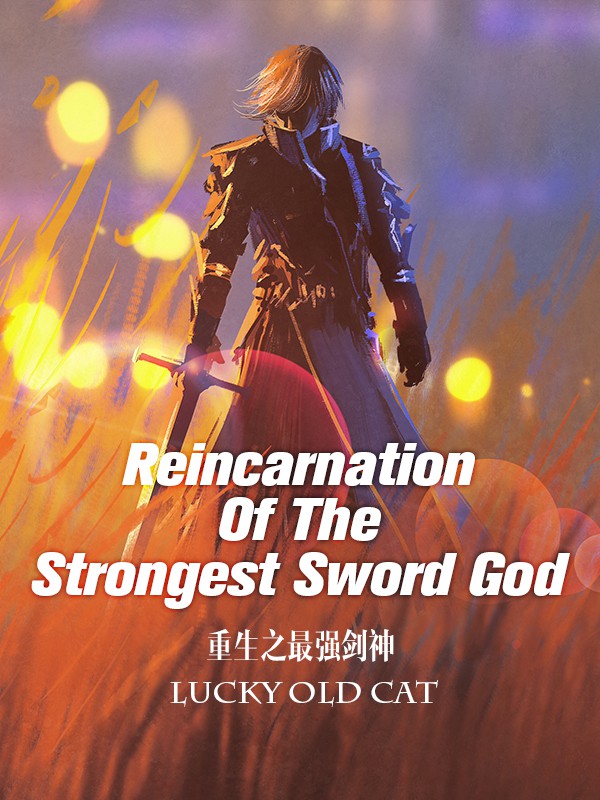
What keeps me reading Reincarnation Of The Strongest Sword God


Reincarnation Of The Strongest Sword God is a Chinese web novel written by Lucky Old Cat, 天运老猫. It's a mix of Chinese martial arts, LitRPG, and science fiction, and currently on Volume 29 and Chapter 2850. It is still ongoing.

The premise of the story is very simple. The protagonist who spent last 10 years of his life trying to make a name for himself and achieve greatness in an online game called God's Domain gets fired because of hostile takeover. And he starts over. 10 years in the past. This magical device was never explained but it serves as the central point that allows Shi Feng to take advantage of certain situations in the game because of his memories of, let's call it his past life.

From here on the adventure begins, and the story never disappoints. 

Wednesday, January 6, 2021

Book list 2020

Five stars

The World Armada, John C. Wright

The Space Vampires, John C. Wright

Dune, Frank Herbert

The Man Who Was Thursday; A Nightmare, G.K. Chesterton


Four stars

The LawDog Files, D. LawDog

The LawDog Files: African Adventures, D. LawDog

Potovati z Orwellom, Jože Biščak

Suicide of the West: An Essay on the Meaning and Destiny of Liberalism, James Burnham

Solomon Kane: The Right Hand of Doom, Robert E. Howard

Ship of Fools: An Anthology of Learned Nonsense about Primitive Society, C.R. Hallpike

Shadows in The Moonlight, Robert E. Howard

Three stars

Flying Sparks, Jon Del Arroz

Reincarnation of the Strongest Sword God Volume 1, Lucky Old Cat

Reincarnation of the Strongest Sword God Volume 2, Lucky Old Cat

Reincarnation of the Strongest Sword God Volume 3, Lucky Old Cat

Reincarnation of the Strongest Sword God Volume 4, Lucky Old Cat

Reincarnation of the Strongest Sword God Volume 5, Lucky Old Cat

Reincarnation of the Strongest Sword God Volume 6, Lucky Old Cat

Reincarnation of the Strongest Sword God Volume 7, Lucky Old Cat

Reincarnation of the Strongest Sword God Volume 8, Lucky Old Cat

Reincarnation of the Strongest Sword God Volume 9, Lucky Old Cat

Reincarnation of the Strongest Sword God Volume 10, Lucky Old Cat

Reincarnation of the Strongest Sword God Volume 11, Lucky Old Cat

Reincarnation of the Strongest Sword God Volume 12, Lucky Old Cat

Reincarnation of the Strongest Sword God Volume 13, Lucky Old Cat

Reincarnation of the Strongest Sword God Volume 14, Lucky Old Cat

Reincarnation of the Strongest Sword God Volume 15, Lucky Old Cat

Reincarnation of the Strongest Sword God Volume 16, Lucky Old Cat

Reincarnation of the Strongest Sword God Volume 17, Lucky Old Cat

Reincarnation of the Strongest Sword God Volume 18, Lucky Old Cat

Reincarnation of the Strongest Sword God Volume 19, Lucky Old Cat

Reincarnation of the Strongest Sword God Volume 20, Lucky Old Cat

Reincarnation of the Strongest Sword God Volume 21, Lucky Old Cat

Reincarnation of the Strongest Sword God Volume 22, Lucky Old Cat

Reincarnation of the Strongest Sword God Volume 23, Lucky Old Cat

Reincarnation of the Strongest Sword God Volume 24, Lucky Old Cat

Reincarnation of the Strongest Sword God Volume 25, Lucky Old Cat

Reincarnation of the Strongest Sword God Volume 26, Lucky Old Cat

Jordanetics: A Journey Into the Mind of Humanity's Greatest Thinker, Vox Day

Prisoners of Darkness, Jason Anspach & Nick Cole


Two stars

Lonestar: Heart of the Hero, Mike S. Miller


One star

War Crimes, Christie Golden

Catch-22, Joseph Heller

Thursday, December 10, 2020

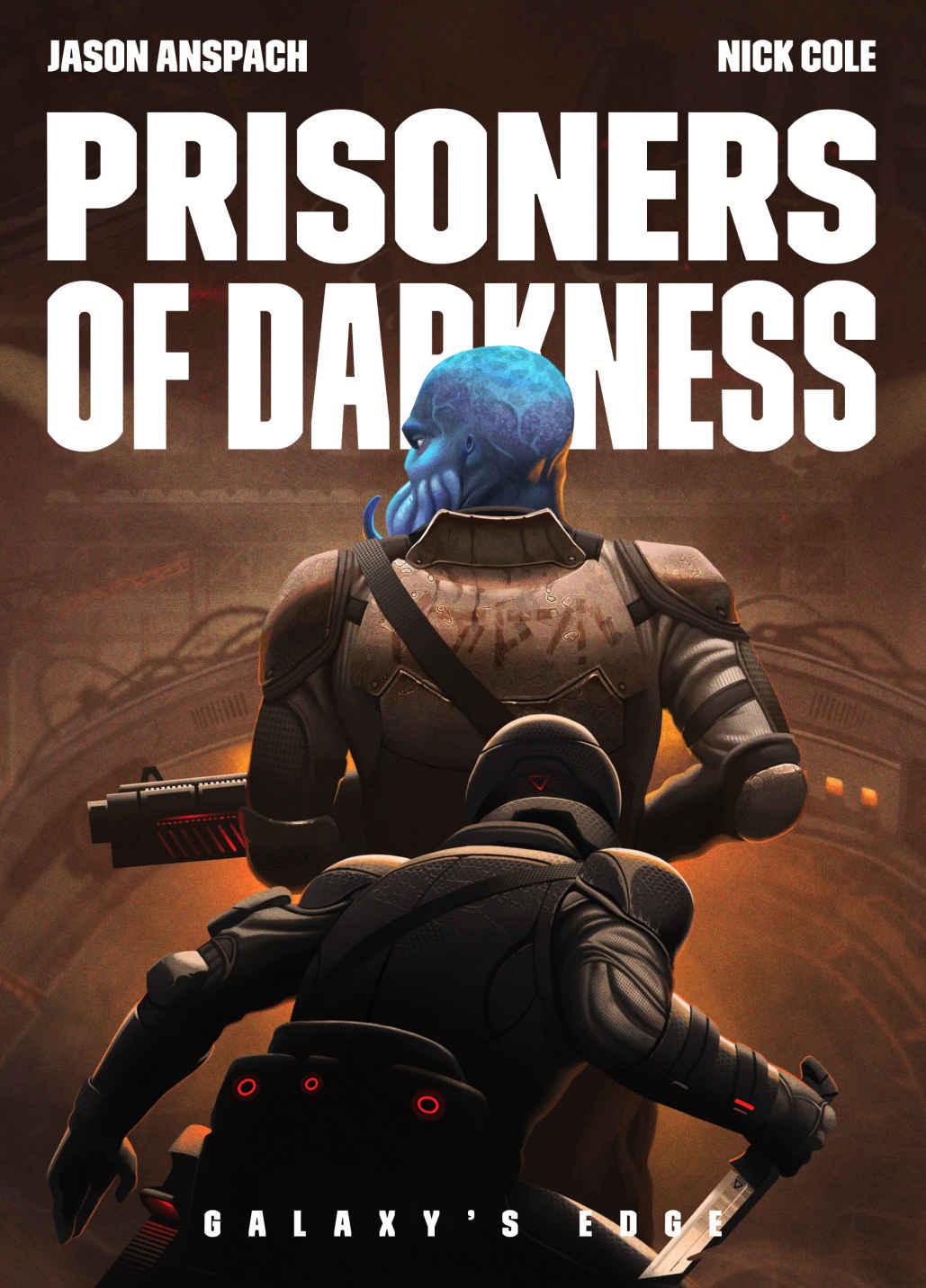
Prisoners of Darkness (Galaxy's Edge #6) by Jason Anspach & Nick Cole


 I returned to the main storyline of Nick Cole's and Jason Anspach's military sci-fi book series called Galaxy's Edge after a little over two years. And it was as if I never left.

Prisoners of Darkness, book number 6 in the main series picks up the story immediately after the end of Sword of the Legion.

Since there will be potential spoilers, consider yourself properly warned.

The recurring theme of the series about "Points" being omens of ruin brought upon the Legion by the House of Reason takes the center stage in PoD. Cole & Anspach are not here to reinvent the wheel, but instead to provide entertainment for their readers.

The book is a breeze to read through, while the story continues to expand. The new and ominous threats that were in the previous books only myths, legends and rumours don't take the center stage, but they do make their presence known.

If in the past the theme was that maybe parts of the Republic were corrupt, but the rest was either ignorant or stupid, this time around it is shown that there really is no saving the Republic, neither from the enemy, nor from itself. It's just too corrupt, too stupid, and too ignorant all at the same time.

The newly formed Empire on the other hand has its own set of problems, but we only get to see a glimmer of those.

Still the story focuses on Major Owens who was designated fall guy for successfully thwarting the Empire, and thus sent to a prison planet, where he discovers he's not the only Legionnaire to be sentenced to forced labor just because he did things right. What is more, the Republic he spent his life fighting for, is actually working with the slavers, and the prison planet is the prime location for all those whom Republic deems undesirable for one reason or another - wrongthink included.

On the other hand we have members of Victory Squad who are determined to save their wrongly convicted superior officer from hell even if it means going against the Republic. Even if it means working side by side with smugglers, pirates, and slavers.

All in all, Prisoners of Darkness provides entertaining read for anyone looking to get their dose of military sci-fi. What it does lack in comparison to the previous instalments, is the ability to play on the reader's heart strings. The moments are still there, but they are few and far between.

I give it 4/5.

Sunday, December 6, 2020

Who knows what evil lurks in the hearts of men? The Shadow knows ...


I always liked playing around in various character creation screens in videogames. Making my character just right, just the way I want it.

Since I've discovered HeroForge, I've been toying around creating various characters from my tabletop games, books, and other media. The tool was primarily designed for people who want to have a 3D print of their own characters in their tabletop roleplaying games like Dungeons & Dragons. Since then they added a number of features allowing the creation of all sorts of characters.

Here's my take on The Shadow. The man, the myth, the pulp legend himself. Or as Razörfist would describe him: 

"Retribution personified, vengeance made flesh, the prince of the pulps, sire of the superheroes, receptacle of more pale imitation than a Michael Jackson's impersonators convention. By whatever name, employing whatever descriptor the inimitable Shadow has weathered nearly a full century of fiscal fiscal turpetudes, publisher buyouts, plagiarism and licensing SNAFUs. He survived the death of radio, he weatherd the comic book crash. He persists in the age of piracy, and above it all, he continues to have relevant stories to tell and adventures to imbibe in all the way into 2016."


"The weed of crime bears bitter fruit. Crime does not pay...The Shadow knows!"